
You may know what your guard operation spends on payroll.
But do you know what it is losing through overtime, manual reporting, supervisor follow-up, incident documentation, patrol verification gaps, and limited visibility across posts, sites, officers, and shifts?
That is where the real cost often hides.
Not in one obvious line item. Not in one dramatic failure. Not in one report that went missing.
It hides in the daily grind of the operation:
- Officers spending too much time completing routine reports
- Supervisors chasing missing details after the shift is already over
- Incident reports that need cleanup before they can be trusted or shared
- Patrol activity that is difficult to verify without extra follow-up
- Overtime that keeps repeating because coverage pressure never really goes away
- Managers who cannot see operational weak spots until they become client complaints, budget pressure, audit questions, or leadership concerns
If you manage a security guard company or an in-house security team, these costs matter because they do not just affect the budget. They affect control.
They affect how much confidence you have in your operation.
They affect how quickly you can answer the question every security leader eventually faces:
What is actually happening across my operation — and what is it costing me?
That is why GuardMetrics created the Free Security Operations Cost & Risk Assessment.
It gives you a practical way to turn hidden workload, reporting friction, overtime pressure, and accountability gaps into a clearer cost and exposure snapshot you can actually use.
👉 Start the Free Security Operations Assessment
What Is a Security Guard Operations Cost Assessment?
A security guard operations cost assessment is a structured way to identify where your operation may be losing money, time, visibility, and control.
Instead of guessing where the weak spots are, the assessment walks you through the operating areas that usually create the most pressure inside a guard operation.
It helps you look at:
- Your number of officers
- Average officer wage
- Weekly shift volume
- Officer reporting time per shift
- Weekly overtime hours
- Overtime multiplier
- Supervisor administrative hours
- Incident report volume
- Incident report completion time
- Patrol verification method
- Reporting and audit readiness
- Real-time operational visibility
- Growth or coverage pressure
- Your biggest current operational challenge
That matters because the cost of a security operation is not only what appears in payroll.
The real cost includes the labor and management time buried inside the workflow.
If daily reports take too long, you pay for it.
If supervisors spend too many hours chasing missing information, you pay for it.
If incident reports require cleanup before they can be trusted, you pay for it.
If patrol verification is weak, you may pay for it in follow-up time, client confidence, documentation problems, and management uncertainty.
The point of the assessment is simple:
Find the weak spots. See the cost. Start with the fix that matters most.
Why You Should Assess the Operation Before You Try to Fix It
It is easy to assume you already know where the problem is.
Maybe overtime feels like the issue.
Maybe reporting is the obvious frustration.
Maybe supervisors are buried in administrative follow-up.
Maybe clients are asking for better documentation.
Maybe you are adding sites, shifts, posts, or officers and the operation is becoming harder to manage.
But instinct is not enough.
Security operations are too expensive, too labor-driven, and too accountability-sensitive to fix by guesswork.
A structured assessment helps you separate the loudest problem from the most expensive problem.
That distinction matters.
The problem that annoys management the most may not be the one costing the most money. The issue that creates the most overtime may not be the same issue creating the most reporting exposure. The area creating the most client friction may not be obvious until you look at reporting, patrol verification, and supervisor follow-up together.
That is why assessment-based thinking is already common in security planning.
ASIS International describes security risk assessment as a structured process for identifying, analyzing, and evaluating risk. CISA’s Security Assessment at First Entry is also built around the idea that a structured physical security review helps owners and operators identify vulnerabilities and improve security programs.
The GuardMetrics assessment is a practical operational cost and exposure assessment built for security guard operations. It is not a full professional security risk assessment and it is not legal advice.
It helps you answer a more immediate management question:
👉 Start the Free Security Operations Assessment
Where is my guard operation losing time, money, visibility, and control right now?
The Hidden Cost Msost Guard Operations Underestimate
Most security leaders do not ignore costs.
They track payroll. They watch overtime. They know when clients complain. They know when staffing is tight. They know when supervisors are overloaded.
The problem is that some costs are hard to see because they are spread across hundreds or thousands of small actions.
A few extra minutes per shift.
A few more hours of supervisor follow-up.
A few incomplete reports.
A few patrol questions that require manual review.
A few incidents that take longer than they should to document, clean up, and close out.
Individually, they may not look serious.
Across an entire guard operation, they can become a serious drain.
1. Overtime That Keeps Eating Margin
Overtime is sometimes unavoidable.
Posts need coverage. Clients expect service. Hospitals, schools, warehouses, casinos, corporate campuses, residential communities, and commercial properties still need officers on duty.
But recurring overtime is different.
Recurring overtime is not just a staffing issue. It is a margin issue. It is a planning issue. It is often a visibility issue.
If you cannot clearly see how much overtime is being used, where it is coming from, and whether it is tied to preventable workflow problems, the operation becomes harder to control.
The GuardMetrics assessment asks for total weekly overtime hours and overtime multiplier so you can estimate the annual overtime premium tied to your current operation.
That gives you a better question than “Are we using overtime?”
It helps you ask:
How much is overtime really costing us over a full year — and is it covering a temporary need or hiding an operational weakness?
2. Supervisor Time That Disappears Into Administrative Follow-Up
Supervisor time is one of the easiest costs to underestimate.
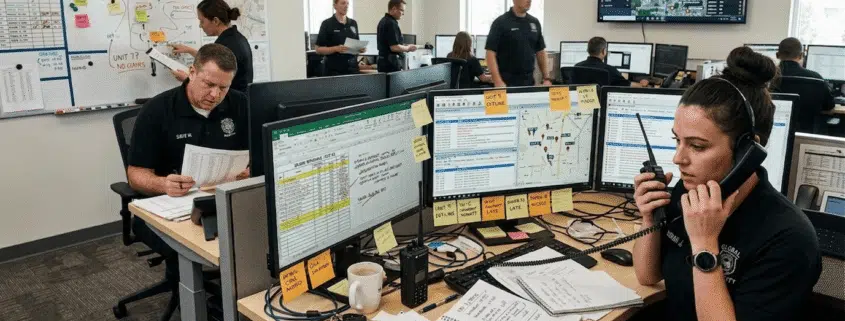
You may know what your supervisors are paid. But do you know how much of their week is being consumed by manual follow-up?
That includes time spent:
- Reviewing reports
- Chasing missing information
- Verifying patrol activity
- Handling schedule changes
- Checking incident details
- Preparing client updates
- Following up with officers
- Manually confirming what happened during a shift
Some of that work is necessary.
But when too much of it is manual, the operation becomes harder to scale.
Your supervisors should not spend their best hours cleaning up preventable workflow friction. They should be focused on oversight, coaching, client confidence, service quality, and problem prevention.
The assessment turns supervisor administrative time into a cost category.
That matters because once you see what manual supervision is costing annually, it becomes easier to decide whether the process needs to change.
3. Daily Reporting Time That Looks Small Until You Multiply It
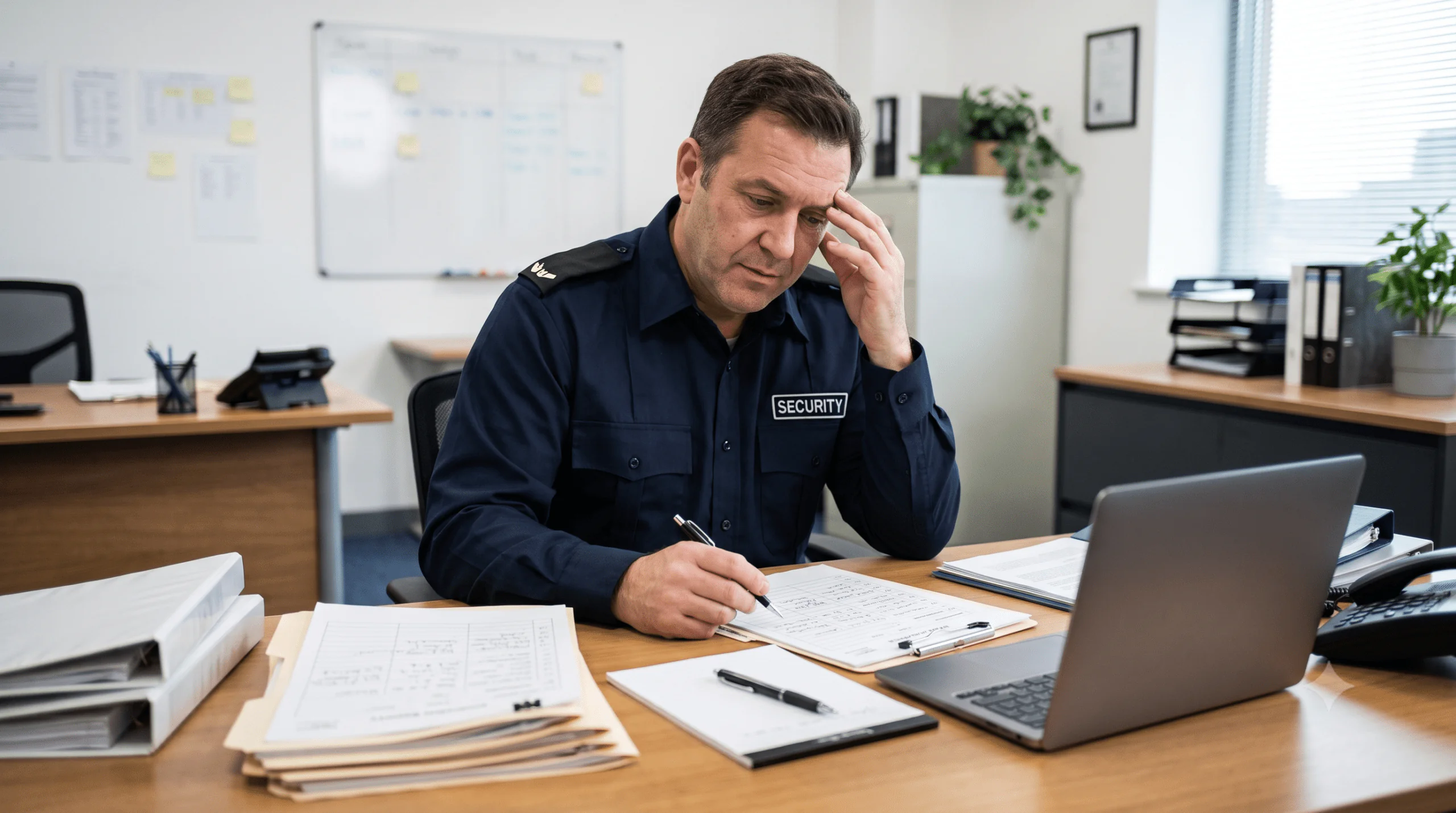
Five minutes does not sound expensive.
Ten minutes may not sound alarming.
But multiply reporting time across every officer, every shift, every site, every week.
Now the cost becomes real.
Daily activity reports, shift notes, logs, routine reports, and field documentation all matter. The issue is not whether officers should report. They should.
The issue is whether reporting is efficient, consistent, reviewable, and useful.
If the reporting process is slow, manual, hard to retrieve, or difficult for supervisors and clients to use, you are paying for documentation that may still leave management without the visibility it needs.
The GuardMetrics assessment asks how much time officers spend on daily reporting per shift.
That one input can expose a cost that many operations never calculate.
If reporting is one of your weak spots, GuardMetrics’ mobile guard reporting app can help security teams reduce reliance on paper logs and scattered documentation while improving field reporting visibility.
4. Incident Reports That Take Too Long to Complete, Review, and Trust
Incident documentation is where operational cost and operational exposure often meet.
A report that is incomplete, delayed, unclear, or hard to retrieve can create extra work for everyone involved.
The officer spends time writing it.
The supervisor spends time reviewing it.
Management may spend time clarifying it.
The client may need answers.
And if the report is missing details, the cleanup becomes another hidden cost.
The GuardMetrics assessment asks for incident report volume and the average time needed to complete each report.
That helps you see whether incident documentation is a manageable workflow or a recurring administrative burden.
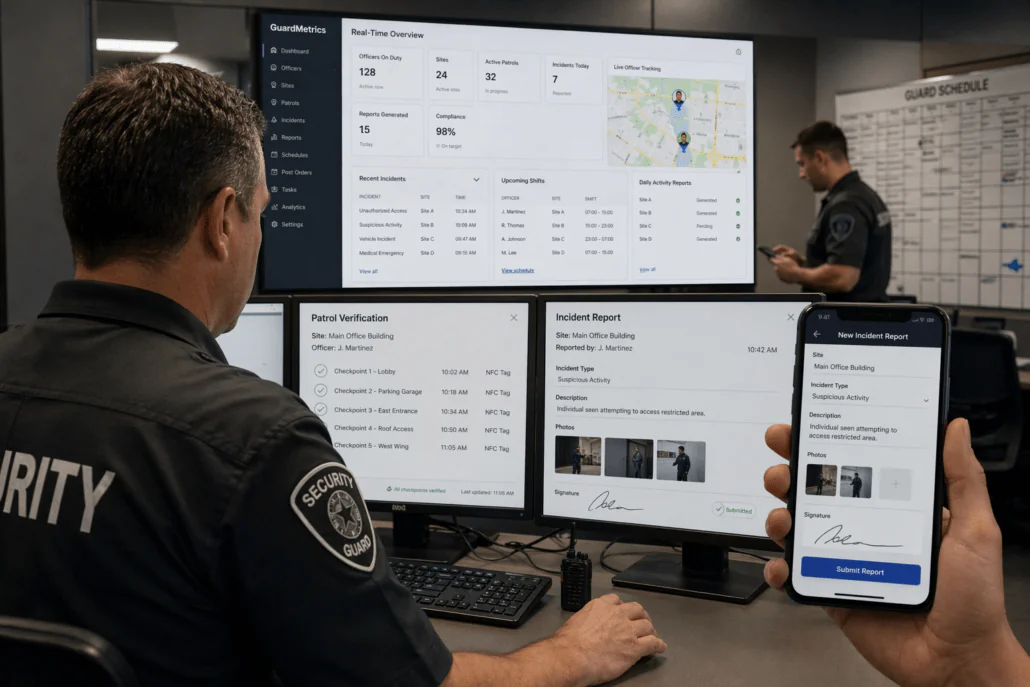
For teams that need cleaner incident workflows, GuardMetrics’ incident reporting system helps organize incident documentation and supervisor review so reports are easier to manage and use.
5. Patrol Verification Gaps That Create Questions You Should Not Have to Chase
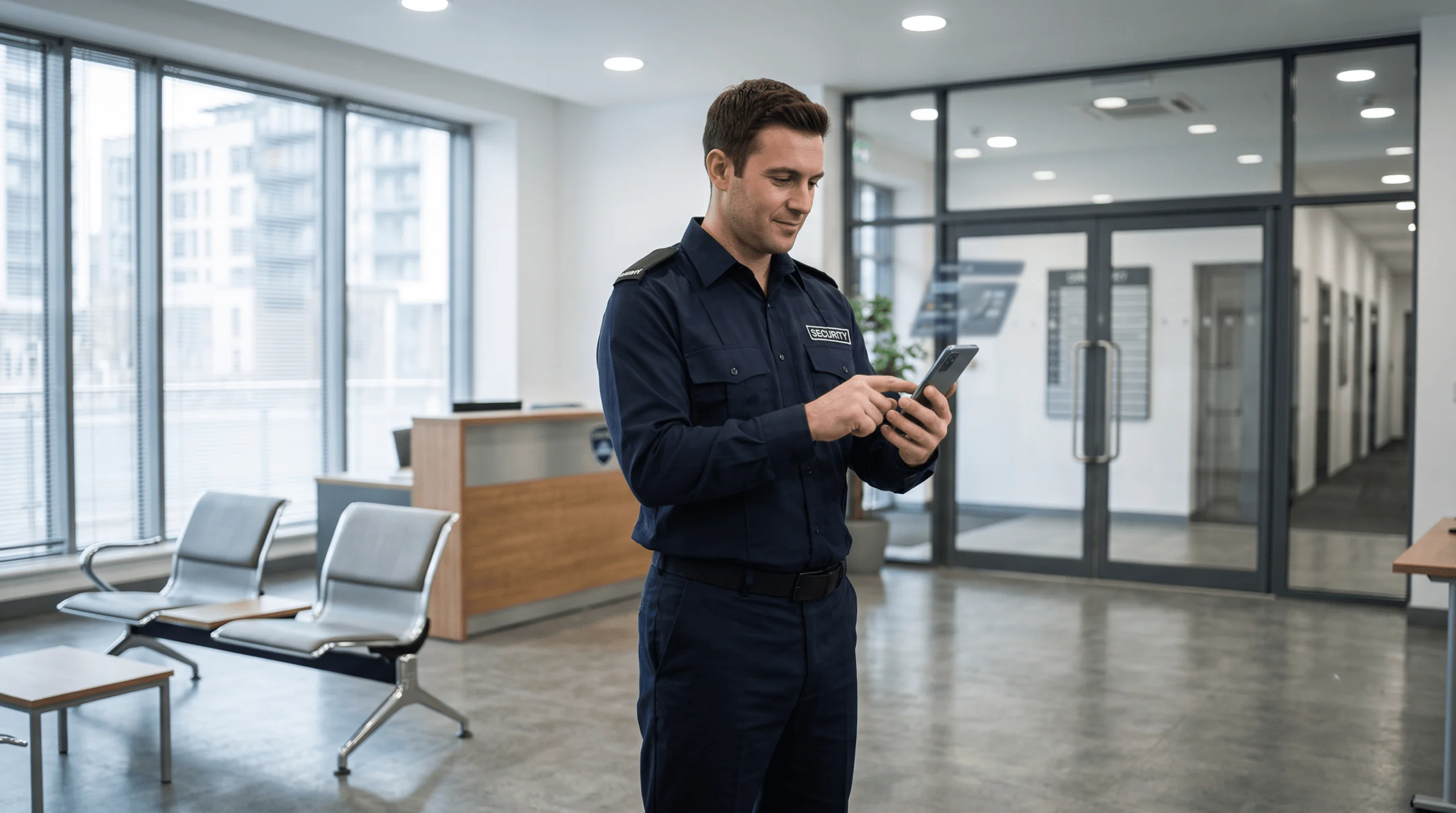
Patrol accountability should not depend on guesswork.
If patrol activity is tracked through paper logs, radio calls, spot checks, or inconsistent manual notes, management may not have a clean way to verify what happened.
That creates operational drag.
When a client asks about a patrol, someone has to investigate.
When a checkpoint is missed, someone has to figure out whether the patrol was skipped, delayed, incomplete, or simply undocumented.
When supervisors lack clear patrol visibility, follow-up takes longer.
The assessment asks about your patrol verification method because patrol accountability directly affects operational confidence.
If patrol verification is one of your weak spots, GuardMetrics’ guard tour system helps security teams verify checkpoint activity and improve patrol visibility.
6. Reporting and Audit Readiness Problems That Surface at the Worst Time
Some reporting problems do not feel urgent until someone asks for the records.
A client wants a report.
A manager needs incident history.
A supervisor needs to review activity across a site.
An executive wants to know what happened.
An audit or review requires documentation.
That is when inconsistent reporting becomes expensive.
If reports are hard to find, incomplete, scattered, delayed, or dependent on manual cleanup, the cost shows up in staff time and management frustration.
The GuardMetrics assessment asks whether reports are consistent and easy to retrieve, usable but require cleanup, inconsistent or hard to find, or mostly manual and reactive.
That is a valuable question because reporting quality affects more than paperwork.
It affects confidence.
It affects client communication.
It affects how quickly leadership can understand what happened.
7. Limited Visibility That Keeps Management Reactive
Limited visibility is one of the most dangerous costs because it does not always feel like a cost at first.
It feels like normal management.
A supervisor checks in.
A manager follows up.
Someone calls the site.
Someone looks for a report.
Someone asks whether the patrol was completed.
Someone confirms whether an incident was documented.
But if your operation depends on constant manual checking, you are not managing from visibility. You are managing from friction.
That can work when the operation is small.
It becomes harder when you add officers, sites, shifts, supervisors, clients, or coverage requirements.
The GuardMetrics assessment asks you to rate real-time operational visibility because visibility affects how quickly you can detect issues, respond to gaps, and know where management attention is needed.
Better visibility does not replace management responsibility.
It gives management a stronger operating picture.
What the GuardMetrics Assessment Gives You
The Free Security Operations Cost & Risk Assessment is designed to give you a practical cost and exposure snapshot based on your own inputs.
It does not give you generic advice.
It uses your operation profile to estimate where labor, reporting, supervision, incident documentation, patrol accountability, and visibility gaps may be creating measurable cost and operational pressure.
After completing the assessment, you can see:
- Estimated annual labor and process cost
- Overtime premium impact
- Supervisor administrative time cost
- Daily reporting labor cost
- Incident reporting labor cost
- Exposure indicator
- Efficiency level
- Operational insights
- Priority recommendations
It takes about three minutes, and you see a preliminary estimate before any contact information is requested.
That gives you something useful to work with.
Not a vague “you should improve operations” message.
A clearer view of which operational area may deserve attention first.
👉 See Your Estimated Annual Cost
Who Should Take the Assessment?
Take the assessment if you are responsible for the cost, control, performance, or accountability of a guard operation.
That includes:
- Security guard company owners
- Presidents and CEOs of guard companies
- Operations managers
- Regional and area managers
- Security directors
- Security managers
- In-house security leaders
- Facilities and property managers overseeing security teams
- Healthcare security teams
- School and university security departments
- Casino and entertainment security teams
- Logistics and warehouse security teams
- Corporate security teams
Hybrid operations using both contract and in-house security
You do not need to be in crisis to benefit from the assessment.
In fact, the better time to assess the operation is before weak spots become client complaints, budget overruns, missed documentation, supervisor burnout, or leadership scrutiny.
How to Use Your Assessment Results
Once you complete the assessment, do not treat the result as a one-time number.
Use it as a management tool.
Look at the category creating the most cost or exposure and ask:
- Is overtime recurring because of unavoidable coverage needs or preventable scheduling pressure?
- Are supervisors spending too much time on manual follow-up?
- Are officers spending more time than necessary on routine reports?
- Are incident reports clean enough to trust and retrieve quickly?
- Can patrol activity be verified without extra investigation?
- Are reports easy to find when clients or leadership ask for them?
- Is management seeing problems early enough, or only after escalation?
- Which weak spot would produce the biggest improvement if addressed first?
The assessment does not force you to fix everything at once.
That is not realistic.
It helps you identify the first operational issue worth fixing.
That is how improvement should start: not with guesswork, but with a clearer view of what is costing you the most.
Where GuardMetrics Fits After the Assessment
Once you see where the pressure is coming from, the next step is to decide whether your current workflow gives you enough visibility and control.
GuardMetrics helps security guard companies and in-house security teams improve the daily workflows behind many of the issues measured in the assessment.
If reporting is taking too long, GuardMetrics’ mobile guard reporting app helps officers document activity from the field.
If incident documentation is inconsistent or hard to manage, the incident reporting system helps organize incident records and supervisor review.
If patrol activity is hard to verify, the guard tour system helps improve checkpoint accountability and patrol visibility.
If timekeeping and shift activity are difficult to manage, GuardMetrics’ timekeeping software system app supports cleaner guard timekeeping workflows.
If management needs broader officer oversight, the security officer management system supports operational visibility across officers, posts, reporting, and field activity.
The assessment helps you identify the problem.
GuardMetrics helps you evaluate the workflow behind it.
And when you are ready to look at the workflows directly, you can request a GuardMetrics demo.
Bottom Line: Your Operation May Be Costing More Than Payroll Shows
Payroll tells you what you paid.
It does not always tell you what your operation is losing.
It does not show the full cost of manual reporting, supervisor follow-up, overtime pressure, incident cleanup, patrol verification gaps, poor report retrieval, or limited visibility.
Those costs can stay hidden for months or years because they are buried inside the daily workflow.
But hidden does not mean harmless.
If you manage a security guard company or an in-house security team, you need a clearer view of where the operation is costing you time, money, and control.
Start with the assessment.
It takes about three minutes, you see a preliminary estimate before entering any contact information, and the full results show the costs, exposure indicators, and priority improvement areas inside your own operation.
👉 Start the Free Security Operations Cost & Risk Assessment
FAQs
What does the Security Operations Cost & Risk Assessment measure?
It estimates costs and exposure based on the information you enter about overtime premiums, supervisor administrative workload, daily reporting time, incident report volume, incident report completion time, patrol verification, reporting and audit readiness, operational visibility, growth pressure, and your biggest current operational challenge.
Is the assessment only for security guard companies?
No. The assessment is designed for security guard companies and organizations that manage in-house or hybrid security teams, including healthcare, schools, property management, casinos, logistics, corporate security, and other security operations.
Does the assessment guarantee savings?
No. The assessment provides directional estimates based on the information entered. Actual costs and improvement opportunities vary by wage rates, staffing models, post requirements, reporting workflows, supervision structure, and current operating processes.
Why should I complete the assessment before requesting a demo?
The assessment helps identify which operational issue may deserve attention first. That makes a follow-up conversation more useful because you can focus on the cost, workload, accountability, reporting, or visibility issue that appears most important in your operation.
How long does the assessment take?
The assessment is designed to take about three minutes. It provides a preliminary estimate before contact information is requested.
What should I do after completing the assessment?
Review the cost breakdown, exposure indicator, efficiency level, operational insights, and priority recommendations. Then decide which issue should be addressed first: overtime, supervisor workload, reporting time, incident documentation, patrol accountability, audit readiness, or visibility.
[/vc_column_text][/vc_column][/vc_row]
 GuardMetrics
 GuardMetrics